Showing posts with label contemporary novelists. Show all posts

Sunday, 25 May 2014

Causerie à deux in “Kathleenville”


An interview with Kathleen Winter


Two months ago I published a post on this blog, which was a review of Kathleen Winter’s novel, Annabel. It was followed, soon after, by a review on my other blog, Zero to One, where I called it “a book of contrasts.” The novel had been a finalist in the 2014 edition of Canada Reads, the most important book-reading event taking place in Canada. I was a little upset when the novel was excluded from the competition based on an interpretation that I found (and still find) completely wrong and unfair. As my friends know too well (and as will become apparent below), I am not a Canadian. But Annabel caused avalanches of thoughts in my mind, a lot of them too Canadian not to be highlighted. So I wrote the blog posts mentioned above. But I wanted to know more. And there was only one way I could find out the author’s perspective on place and space (which are, to me, the strongest elements in the novel). I contacted Kathleen Winter and asked her to give me an interview. To my delight, she accepted. Here is the result of our electronic exchanges:


The novel features a strong contrast between geography and urbanism. On the one hand, there is Croydon Harbour, a place that doesn’t exist on real maps – a mythical place of vast expanses, of white winters, of seasons that follow their own path, where humans are nothing if not subservient to ontology. On the other hand, there is St John’s, a real place in Labrador-Newfoundland – a place of human interests, of explosive colours, of distances that can be measured, of streets that limit movement or channel people’s actions. This contrast reminded me of the French philosopher Gilles Deleuze, who proposed a distinction between what he called “smooth spaces” (the equivalent of your Croydon Harbour) and “striated spaces” (your St John’s). Would it be fair to say that the novel hinges on the understanding of this relationship and its own hermaphroditical nature? ||| My brother Michael told me that my writing about Croydon Harbour is really about a place he calls “Kathleenville”. He sees it as an extension of my imagination, which I suppose in a way it is. I have to admit, though, that as I wrote about Croydon Harbour, I thought I was writing about the real Labrador, and not really an imaginary place. It surprises me to find out that what I think of as earthy, real, tangible aspects of a place might in fact be none of those things. When I was writing Croydon Harbour, I envisioned Labrador communities I had seen and known. The landscape, the animals, the vegetation and the skies are “real”. But yes, the power and electricity and magnetism of the place, well, I guess they are real as well, but in order for them to be manifest they need a person, or consciousness, to meet them. St. John’s is a place I lived in for decades, but there again, in a way, it represents layered myth and story, to me. It’s sort of like a ragged, east coast San Francisco – the hills, the coloured houses, and what my daughter calls the higgledy-piggledyness. I love it there. The contrast between Croydon Harbour and St. John’s is, for me, partly about intimacy. Croydon Harbour is a place where the soul expands out into great space, whereas St. John’s is where it rests, like a cat, kittycorner and protected.

Croydon Harbour feels like a place that had to be imagined. My question is: what came first – Wayne or Croydon Harbour? Which one started the engine of the novel? ||| The character, the person of Wayne/Annabel, started the engine and caused me to begin writing a short story that would turn into the novel.  I met a Labrador artist who had worked a startling and mysterious figure into a beaded work on black felt, and when I asked her about this figure, she told me it was “a hermaphrodite.” She told me people of dual gender were known about and accepted in Labrador as having special powers. I had already begun writing the book when she told me this, but she helped me see a bigger picture, and Labrador was part of that picture.

Did you imagine the other places mentioned in the novel (I mean, of course, the places visited by Thomasina, which you describe to a certain extent) or did you actually see them all yourself? ||| I knew some of the places, such as London, from experience. My dear friend Elizabeth wrote me postcards from Bucharest that I used, with her permission, when describing Thomasina’s postcards. Elizabeth was my friend in St. John’s and she rented her basement apartment to a pair of Mormon missionaries. They came upstairs in the evenings and she gave them tea and cookies and they enraptured her so thoroughly with the Book of Mormon that they converted her and she became a Mormon missionary herself, which is how she got to Bucharest. Elizabeth is an artist and she has the best stories of anyone I know, the most humane and heartrending and compassionate. I beg her to let me use them and every now and then she does. Other places in Thomasina’s travels I researched or imagined.

In my review, I reflected on the myth of the androgyne, because it seemed so obvious to me. I have not seen this aspect mentioned in other reviews. Of course, I haven’t seen all of them! But how does this stand with you? Did you draw inspiration from literature that accommodated the idea of the hermaphrodite? ||| I have always been fascinated with gender, and have always felt a tension at having to play-act at being female. All my inspiration is unconscious, so it’s hard for me to be exact about a question like this. I just know that androgyny excites me and always has, whether in myth and story, or in life. Whenever I see or hear of someone who has broken the prison of gender duality, I feel released, somewhere deep in myself. Every single one of my favourite writers lives or lived beyond gender.

Wayne is written as a boy. Did that make it difficult to you to imagine him, to write his ‘gender-specific’ thoughts and actions? ||| It was the most difficult part of the book. In some ways, I feel it was impossible for me to do justice to this, which is why if you examine the story it becomes obvious that most of the gender-defining comes from people around the main character. In a way, Wayne/Annabel is transparent, and might even be said to be nonexistent. This is why I needed the idea of bridges in the book. The structure of bridges, their substance and their engineering, along with their overarching beauty, loftiness and grace, gave me a sort of whole entity that Wayne and Annabel could embrace and be interested in. I mean, you can’t have one without the other.

A Canadian trapper (a type embodied by the character Treadway)
Source: Le Dernier Trappeur, via www.avcesar.com
Wayne is the protagonist of the novel, but his father, Treadway, covers a lot of narrative territory as well. And of course, the ending belongs to him too. I don’t have the right metrics to measure this, but it seems that he appears more often than other characters in the novel. Why is that? ||| I began with one opinion and vision of Treadway, as a macho, one-dimensional man. But I based him on several men I know, and I think perhaps because of this, he quickly taught me that pinning him down would not be so easy. He taught me that nobody is one-dimensional. He taught me that love can make a father change his mind and question his own fears, and accept one’s child. He was not what I expected. My editor, at one point (when a fourth or fifth draft was not working), asked me if I should maybe “kill off” Treadway in the second half. I think that when she asked me that, I suddenly knew how important Treadway was, to the book. Her question made me work on bringing out his power and loveliness.

Also on Treadway: he never struck me as a person capable of thinking about murder. He kills animals for a living, but that’s where his capacity to kill seems to stop. He is not violent, he is not unfair, he is not revengeful. And so his determination to punish those who had dishonoured his son took me by surprise. Not that I though him incapable of reaction; but to me he seemed more likely to respond with a reflection rather than such a drastic action. When did that transformation happen in him? ||| I think of that time in Treadway’s mind as the time he regretted that he had not been able to protect his daughter. He thought of the attack as an assault on a daughter, and felt a father’s quiet, poisonous and lethal rage. I think it was fuelled by deep sorrow and regret that he had failed to prevent the violence against Annabel. Also, I felt that he knew the perpetrator would hurt someone else in the future. He wanted to at least prevent this. From a purely practical standpoint, he would dearly have loved to incapacitate the cruel, stupid bully.

To end with, there’s another aspect that I find striking in your novel: reading. Your characters read a lot. And not just each other’s letters, but books, serious books: Aristotle, Diderot, and so on. Is that normal for a man who goes out trapping in the Labrador wilderness? ||| Yes, it is normal for a Labrador trapper to read. I spent time with an old trapper who told me this, and I also heard it from other people. Trappers like Treadway were part Inuit and part Scots, and there was a lot of European influence on the Labrador coast. If you go to some of the coastal communities now you will find libraries full of books brought by the Moravian missionaries, and Labrador is full of fascinating people who combine practicality and deep knowledge of the land with a knowledge of literature and philosophy, as well as music.

Photo for Le Monde, (c) Jessica Auer
This is where our interview finishes. But I have to say I felt, from the very beginning, that I could spend days talking to Kathleen Winter, on all the intricacies of her novel and the specificities of her characters and stories. In order to understand all this, her novel needs to be read. Annabel needs to be on people’s bookshelves. For its hermaphroditism, for its themes, for its beauty.
||| Also, visit Kathleen’s blog, with a title taken from Elizabeth Bishop’s poetry, to see her other ways of approaching writing, as well as the other wonderful talent she has: drawing. |||

Tuesday, 18 March 2014

Is Kathleen Winter's "Annabel" a Canadian novel?

I’m not sure if any other readers of Annabel have grown frustrated with the discussions televised in the second and third days of Canada Reads, around two weeks ago. Judges could simply not get over the issue of the pregnancy featuring in the novel. I don’t care if what I am saying here is a spoiler, because even if the episode of the pregnancy was meant to remain a secret, the judges have done a great job at making it known to the entire world. So now, we can talk about it without fear of disappointing other readers.


Motto:
“To what strange end hath some strange god made fair
The double blossom of two fruitless flowers?”
(Swinburne, Hermaphroditus)

When I was about thirty or so pages into Annabel I made a note on my bookmark to check if there were any allusions in the novel to Plato’s myth of the androgyne. With a hermaphrodite as the protagonist, the novel had presented itself as a likely contender to the reference.


So when I came upon the ‘pregnancy moment’ I knew I’d found what I’d been waiting for.
Wayne, the character in question, the novel’s protagonist, is discovered to have impregnated himself (unknowingly) due to a natural – says the author – disposition of hermaphrodite bodies to perform sexual functions of both male and female organs.
Aristophanes, in Plato’s Symposium, says this:
“The two parts of man (the Androgyne), each desiring his other half, came together and throwing their arms around one another, entwined in mutual embraces, longing to grow into one; they were on the point of dying from hunger and self-neglect because they did not like to do anything apart.”
Wayne is found to be in a state of constant self-embracement. He behaves equally as a man and as a woman. He has the feelings of both, the physical attributes of both, the desires of both. Even the way he satisfies himself sexually, his idea of orgasm, is ambiguous. What’s more, he reaches a stage where the tension of his singularity is so great he takes no care of his external appearance – something that other characters notice. I found this to be Plato’s Symposium almost to the letter.
As a consequence, I was not at all concerned with the medical possibility of the act of pregnancy in a hermaphrodite body. There was no way I was going to trivialise the beauty of this book by checking out if such self-impregnations were possible. Well, the judges in Canada Reads thought it was worth their salt to play the role of fact-checkers. And what a show they made when they discovered ‘the medical truth.’

Canada Reads, Day 3
Source: CBC
Now, when it’s well known that Annabel is not the winning book, I can reflect on something that became apparent to me as soon as the debates were over. This time, I can say it with confidence: the judges were right to think that Annabel was not a Canadian book. That’s because the scope of the novel and its narrative force go well beyond the geographical limitations of a given country. I am not a Canadian, but I don’t think Annabel was written with Canada in mind. I may seem wrong, since so many places (even the imaginary ones) are so Canadian in nature, but the book certainly doesn’t present itself that way. Catherine Winter has aimed a lot farther and a lot deeper. And in order to arrive at this destination, she employed, at so many levels, this universal myth of the double, the doppelganger, the Janus Bifrons, the facts of coincidentia oppositorum, the internal conflict that transgresses issues of gender, sex, race or any other issues capable of generating binary oppositions. In other words, Annabel is not Canadian because it is too hermaphrodite, too unstable, too risky to pin to a single space or a single idea.
Annabel is a book freed of the strictures of geography, and yet a book in which geography features prominently, blending in with the characters, growing to overwhelm the human.

Unhinged characters

All people in Annabel are soft. They are not people of flesh and bone. They are people of words. So that even the harshest of them, the most brutal or unfair, is laid on the page with a light touch, similar to that of watercolour. There’s really something about the way these characters settle on the page that creates, in my mind, the whole mood of the narrative: a mood in which life is not fought-for but negotiated, and where sentiments are turned on the proper side the way you turn a pillow on the cool side on a hot summer day when your bed is soaked in perspiration.
These people are never complete. They have unresolved issues that loom large after they’ve had their narrative turn, or when they’ve disappeared from sight: like Treadway on his last tracking season, after which he comes resolved to avenge his son; or like Thomasina, who returns to her errand life in search for the best places on Earth; or like Jacinta, who drifts into madness, where all things oscillate between dream and reality. Because of this indecisiveness, no characterisation is ever complete. In almost every chapter there’s a new reason to rest on these characters’ physical appearances, or to delve into their anything-but-static psyches, as if we were seeing them for the first time.
Silky people, their actions - blobs of aquatint. That’s how I like to think about them. They never just speak. They speak while performing little domestic actions or paying tribute to little domestic memories, as if life on Earth were the only source of action. Jacinta and Thomasina talk to each other “as they spread jam on toast thinly, the way they both liked it.” Of her life in the city prior to the marriage, Jacinta remembers with striking accuracy “the pigeons who lived in the O of Browning’s department store.” That’s how the lives of these characters unfold: with exactitude; with the dot on the ‘i’ and the cross on the ‘t’; with details squeezed out of the diachronic nightmare of life.
While reading Annabel, one very often gets this feeling that one is midwifing a world into being. Somehow like Gabriel Garcia Marquez’s Macondo, perhaps: a world that doesn’t explode into life, but develops slowly, through little additions, through little events that take place in an almost natural course of events. This is a world that’s constantly assessed but never invented.

Larger than life

But the novel, a text of in-betweens and dualities, is not only given to these engagements with the little world of domesticity. The other side of things is one that envelops the narrative in a gigantic, mythical veil; in a trans-human blanket.
When the unprecedented fact of a hermaphrodite child occurs to Jacinta, she asks Thomasina (the only other person who knows the secret):
‘’Will other people love it?’
‘That baby is all right the way it is. There’s enough room in this world.’
This is how Thomasina saw it, and it was what Jacinta needed to hear.”
Here, the world is weighed and found capacious. But it is not made into a capacious thing. It is merely assumed to be so. Because, as via the Platonic myth, the world, in its mythical (Labradorian?) age, used to be large enough to contain the third sex: the androgyne.
The world is large enough for all the people who inhabit the world of fictional Croydon Harbour to become palpable. People of flesh and bone, laid on the page with gentle touches, but who perceive geography on a verge between the grandiose and the sublime.
“They didn’t call this place the big land for nothing. It was big in a way that people who came in either respected and followed or disdained at their peril. You could live like a king in Labrador if you knew how to be subservient to the land, and if you did not know how, you would die like a fool, and many had done.”
This is the logic that affects Treadway directly, and the other characters in oblique but not unrelated ways.

Atmosphere

I could go on forever quoting this book. Catherine Winter provides metaphors so evocative they stay with the reader for long, long time. This is, by and large, a book of atmosphere. Its weight and appeal rest in the weight and appeal of its luxuriant descriptions. In this atmosphere, the characters live as if in a warm, comfortable amniotic liquid, refusing to be born: refusing, in other words, to be part of this world, in which us, the readers, reside. 

The colourful city of St John's, the opposite of fictional Croydon Harbour,
a place Kathleen Winter knows by heart.
Source: www.stjohns.ca
Like Macondo (I just can’t help treading this bridge!), the world of Annabel is a self-sufficient world, a world that could live without our reading it. I wouldn’t be surprised to hear someone saying that reading through this novel feels like violating the heavy secrets that make the atmosphere of the novel so dense.
But once you’ve started reading, secrets or no secrets, there’s no way you can stop, unless you find a goddamn good excuse. More importantly, this is not a book to skim through. There are surprises at every corner, beautiful things at every turn of the story. You can’t take a vacation without being burdened by the thought that you have missed a lot by not reading every sentence.

Labradorian winter
Source: www.perceptivetravel.com
This is the kind of reading after which you need a rest. Its imagery and metaphors come in such poetic avalanches, you need to remind yourself of how prosaic the real world actually is.

Tuesday, 4 March 2014

On J.K. Rowling and the fans who take no prisoners

A few days ago I passed on a piece of news that had taken center-stage as an indication of the power of fans. The issue involved writing superstar J.K. Rowling, who had been asked (would “demanded” or “requested” be better words?) by Lynn Shepherd to stop writing. If not for a nobler reason, at least in order to give some space to the debutantes and the not-so-lucky.

One thinks about this and somewhere, in the deep recesses of one’s hopeful mind, the torturing thought appears to make sense. It’s not unlike asking a billionaire to stop making so much money, lest poor startups are left with mere bones to chew on. (Not to mention the really poor, who don’t even have a business to complain about!)
Except we’re not talking about making money here – in spite of the frighteningly big cheques Rowling is cashing in. No, it’s not about money. It’s about writing. What bothered the author of the anti-Rowling tirade (subsequently turned, of course, into kind apologies) was the extent to which the mother of Harry Potter has been monopolizing printed space. And that’s exactly where it doesn’t quite make sense to complain. Why? Because there’s no such thing as monopoly in the world of authors. Yes, yes, I know. I know about those who sell millions of copies, I know about the Dan Browns, the Stephen Kings, and the Dean Koontz’s of the writerly world who seem to have taken book selling to fictional dimensions. But they are far from monopolizing literature. With or without them, literature is doing just as fine. There are still Noble prizes to be won, the Booker grows in prestige every year, and even if we don’t think much of these distinctions, the success of the famous doesn’t stop cohorts of (often bad, often good) self-published authors to rise to internet fame like mushrooms after a good summer rain.

Lynn Shepherd
via www.lynn-shepherd.com
J.K. Rowling
via mayhementertainment411
  
Let’s think about it. Monopoly means the power of one. It’s dictatorship, tyranny, bad stuff. In a monopoly situation all alternatives are paralyzed. Is that what’s happening around the J.R. Rowling industry? Has she killed all possibilities? Are there no other writers publishing and making a lot of money? Are there no fans of other authors who hate Rowling just as much but who would give their lives (metaphorically, of course) to the cause of their own idols? If the answer to any of the above is ‘no,’ we can safely rule out the possibility of monopoly.
One can’t accuse J.K. Rowling of running a monopoly (which she isn’t properly running, since it’s mostly done by her vehement readers) in Rowling Land. Neither can one accuse Dan Brown or Stephen King of the same, when it all takes place in Brown Land or King Land. What these things I call lands have in common is their isolation. They are exclusive territories, with fans who throw their own tantrums, and with readers who have their own tendencies towards xenophobia. But they don’t spill out. Not so much as to worry anybody who is concerned by the fate of literature. They are mostly confined to their reading pleasures and to the circles of aficionados they are affiliated to. They don’t bother the reading time of those who want to read Dickens or who think that Dickens is the only one worth one’s attention. The latter, as we can see, aren’t any better than the former, since what they’re advocating is an equally exclusivist approach to whatever is the object of reading.
My point is this: reading is free. One cannot be persuaded to read what one doesn’t like, which is not unlike saying the opposite: that one always reads what one likes best. Whatever makes them happy!
And so, one’s audience must not be taken to be the only audience there is. Because it’s not. I, personally, haven’t read any of J.R. Rowlings’ books. I didn’t do it because of some literary purism. I simply never had time to approach them. The same way I’ve never had time to finish Anna Karenina. So I am not part of the Rowling audience. But there are many, very many, who do belong in the class of Harry Potter readers. Why should I stumble upon them? Why should I be frightened by them? Why should I be worried? It’s likely we’re never going to cross paths. At the end of the day, we have our own preferences and our own reading schedules, which may or may not collide. If they do, we can talk; if they don’t, we don’t even have to pretend we’ve never heard of each other.

The other side

On the other hand, though, let’s take a look at the opponent as well. It’s only fair to say that, if the argument from the freedom of expression is brought about, then her point should be examined at least with some attention. I would, if I were one of her critics, try to think positively about something that appears in eminently negative lights. What I have in mind is a blog post by Chuck Wendig the other day, who, on a completely different topic, was encouraging people in general (not necessarily the class of readers) to think before judging. That would involve, in his words, thinking in terms such as the following:
“Assume that people who are outraged are sincere and earnest. You don’t have to think they’re right, mind you — nor do you need to appease and placate just because it’s outrage. But assume it’s real. Assume it comes from a place of hurt and not that it’s manufactured just for drama’s sake. Sure, sometimes it is. But you don’t know that and it’s very hard to tell unless you really know the heart of a person — how do you know that they’re just stirring shit because they like the smell and not because they’re actually upset? You don’t. Everyone should approach each other like they’re coming at common ground from different ends, not that they’re trying to burn the crops and salt the earth.
Take a positive twist on your darkest thoughts – this is Wendig’s point. That, to the headless fury of offended fans, doesn’t quite occur as a possibility. Not very often. But to think in response to this Rowling tornado, let’s admit it: the critic was using a tool widely used since reading has become professional and (more recently) interactive. And that tool is called criticism. Just like the fans who exploded against her, maybe all this was her having a word to say about something she didn’t like. Somehow she chose to focus on the wrong thing. Had she stopped at a more specific issue, she would have generated one of those gentle debates that animate fan groups around the world: things to do with character construction, style – you know, the usual stuff of writing.

Fans have been adapting Shepherd's post,
making it into attacks against her own books.
The author of this video went on to post a similar 1-star review
on her Amazon account, just to make the point clearer.

But what if Shepherd is onto something? At the end of the day, frankly speaking, yes: J.R. Rowling is getting more primetime than many other authors. And yes, any article published in a newspaper, a magazine, or a blog takes up print territory to the detriment of all the other articles which could have appeared in the same space. So her calculations are not so darn far-fetched as to completely exclude the point she’s trying to make. Mathematically speaking, she’s right. She’s also right statistically, and for the same reasons: the more attention is paid to a writer, the more he or she gains in the fans department; and the more they do so, the more likely it becomes for their names to appear at the top of all lists of preferences. Poor unknowns, they can only contemplate the rise to power of others, while their own work remains hidden in the clutter of anonymity.

There’s no real monopoly. Not in literature

It looks like I’m returning to the same point over and over again: Lynn Shepherd got the wrong footing on the problem by asking that Rowling stop writing to give the world a better chance. Because – I’m saying it again, I don’t know why – there is no monopoly. Or if there is, it is something way out of a writer’s control. If we look at the list of bestselling authors assembled by Wikipedia, Shakespeare and Agatha Christie are the heads of the entire tribe of writers, with sales between 2 and 4 billion units. I don’t know about Christie, who seems to have grown on the hype of popular culture in the 1970s and ‘80s; but Shakespeare? Poor man would be gob smacked to see the extent to which his celebrity has taken his plays and poetry.

William Shakespeare
via Wikipedia
Agatha Christie
via www.nofemininonegocios.com
What’s more important, though, Shakespeare had no contribution to the spreading of his fame, which started taking off for real only in the late seventeenth century, when he’d been mere shiny bones for about three quarters of a century. His VIP status proves once again that ceasing to write (and to live altogether, for that matter) is no guarantee that fame will plummet.

Who’s the exclusivist?

It’s not clear if Rowling has retaliated. It would have been hardly necessary, since her fans have taken the issue into their able hands and manufactured enough damage to go with the campaign.
You can’t mess with a Lamborghini of contemporary literature and expect to get away with it. That’s a simple lesson many should learn right now, before they put their minds to doing something similar. A lesson Lynn Shepherd was very much aware of (see the first paragraph of her article). But if we look at things from a certain perspective it’s not even hard to see that the one who’s attempting a monopoly is not Rowling, but Shepherd herself. How else could one interpret words such as these:
“By all means keep writing for kids, or for your personal pleasure – I would never deny anyone that – but when it comes to the adult market you’ve had your turn.”
When you want to shut a door so as to keep someone out, whoever that someone may be, you’re sending bad vibes around yourself. And then wait till the passionate ones react…

Monday, 23 December 2013

Speaking of animals

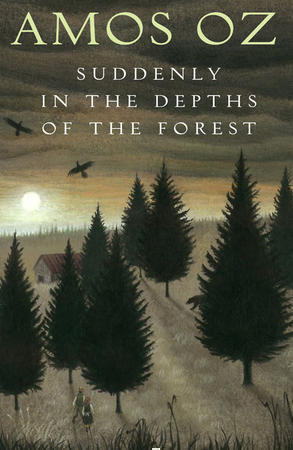
A book reviewer would need to keep in mind the multiple editions
The cover of the book I read
(US edition 2011)

A story about animals, about their flight away from human oppression – could only be allegorical, I think. Amos Oz did what he is best at: write an allegory, and write it as if the whole of his audience would become vegetarians afterwards. The likelihood of that is pretty high, considering the scope of the tale and the purpose of its telling.


Really, the feeling at the end of the book is that this is a text that fits perfectly this age – the age of militant activism, where we seem to speak more and more in words that persuade rather than in words that please. Not that this tiny book is not pleasing. Far from it. But the point is this: it reads like an attempt at indoctrination. The boy (Matti) and girl (Maya) who leave their village hoping to find the animals that had disappeared long time ago, meet Nehi the Mountain Demon – a former villager who had been bullied into leaving the village. In revenge, he took all the animals with him. The village became empty. Oz is great at evoking this: the idea of a village utterly silent in the absence of animals.
“No cow mooed, no donkey brayed, no bird chirped, no flock of wild geese crossed the empty sky, and the villagers barely spoke to each other beyond the essential things."
What seems to be the most painful aspect of this absence is the companionship of animals. What the humans in the village seem to crave the most is not the taste of animal meat, but their faithful, cheerful, friendly presence. One character builds a scarecrow he spends his day talking to. The scarecrow is a surrogate for the lost dog in whose company he used to live. Another character craves for the sound made by the woodworms which used to lull him into sleep every night. When the worms disappear, along with the other animals, he is struck by insomnia. Yet another character scatters around breadcrumbs, in the hope that, one day, some birds will come and enjoy the feast.
That’s Amos Oz – his storytelling talent. The idea he’s proposing for reflection is an old one: you only start appreciating something when it is no longer within your grasp. And he couriers this idea towards the readers in a pretty persuasive way.
But at the end of the novella we get to the point where the text reads like a handbook of proselytism. It’s really only two pages before the end of the book. Nehi, who has accommodated the two children in his utopian garden of paradise, tells them they should go back. They should return to their village, but do it as converts.
“Talk to them. And talk to the insulters and even the abusers and all the ones who take pleasure in other people’s misfortunes. Please, both of you, talk to anyone who will listen. Try to talk even to the ones who make fun of you and condemn you and mock you. Don’t let them get to you – just try to tell them over and over again.”
I’m not going into a close analysis here, but there are aspects that resemble the proselytizing discourse of a lot of texts written nowadays. From weight-loss to vegetarianism, from environmentalism to organic living. In all of these, and in many other instances, there’s this constant urge to “tell them over and over again.” Because this age of ours is an age where we need to persuade others that our way is the best one; and we need to persuade them not in a rhetorical sense, but in a political one.
What makes me think that this is political persuasion? The presence of a threat; not just a fear, a phobia, a sickness of the mind, but a threat that presents itself through its consequences. If the villagers don’t listen to the words of the two children – i.e. if they don’t agree to become animal-loving creatures – they will never see their animals again. If you don’t follow the path, you suffer – that’s the message of all forms of indoctrination. The promise is always hidden behind a threat, and you only rid yourself of a threat if you accept the conditions.
I’m not saying that Suddenlyin the Depths of the Forest is a bad book. I’m not saying it is an evil book. It is none of the above. But it is very much a book of this age. And books – we know – are very rarely timeless (as in not being anchored in the time and place in which they are created). It’s the virtue of Amos Oz’s, then, to have written a book that sounds so familiar – a book that makes an attempt at promoting values of love and friendship. That’s also one thing books do: they promote love and friendship; we are better after having read a book, aren't we?
So yes, love and friendship. Two values that we promote as fundamentally human. So human, they would match the discourse of SPCA, of any Green Party, of any Al Gore ecologism. Or maybe some other, longer-lasting discourses we are so familiar with that it only takes the flicker of a candle to recognize.
Here’s this, on the very last page:
“As Maya and Matti came out of the dark forest, hand in hand, and walked toward the lights of the village, Matti said to Maya, We have to tell Almon. We have to tell Emanuella. We have to tell Danir.
Maya said, Not just them, Matti. We’ll have to tell everyone. My mother. The old people. Your parents. And it won’t be easy for us.”
I read this and I’m thinking of the New Testament (Oz is a Jew, but discourses migrate with extravagant ease, don’t they?). The Bible says:
“If you come to me but will not leave your family, you cannot be my follower” (Luke: 14:26).
Interestingly enough, Suddenly in the Depths of the Forest is also a book about standing out (like the passage in Luke, which requires the followers to abandon their families, their communities) – a book about not following into the footprints of one’s parents, and about the pain one experiences when the crowd notices the drift. The villagers are mostly afraid of an imagined disease which they call ‘whoopitis.’ It is something that makes them whoop – i.e. turns them into something non-human, into animals of sorts.
Nehi sees this fear of isolation, of singularity, not only in humans, but in animals too:
“You edge a little bit away from the swarm just once or twice, and they won’t let you back in. Because you already have whoopitis.”
Whoopitis is the sign of one’s standing on the other side of the community – the sign of the revolutionary.
It’s exactly the revolutionary that needs proselytes, in order to acquire certitude that his/her path is not as crooked as it had been considered by the others. The proselyte is the revolutionary’s confirmation, the warrant of their argument. The number of followers makes one’s YouTube video acceptable. The number of ‘likes’ makes one a public voice. Without them, there would be only an ugly video, a repulsive blog post etc. And so, it makes sense to populate a little book about standing out with characters that strive to acquire followers – characters who, ultimately, strive to create ideologies of their own.
A tiny book of our big times, then. Worth reading, no doubt. Worth, also, thinking about – with the distance that it requires, with the distance that it creates. Because Oz too is a writer of his time, who militates for good causes – causes so good that they are almost impossible to be read critically.


N.B.: By ‘critical’ reading I don’t mean ‘counter’ reading, but the kind of reading that asks questions about the foundations of a text. And when it comes to foundations, no text is safe – no text should be safe.